Low Vision Treatment in Kolkata | Brainsight Neurovision Institute
Better Vision • Brighter Tomorrow
Low vision is a visual impairment that makes everyday activities such as reading, writing, recognizing faces, watching television, or moving around independently more difficult. It may result from eye diseases, injuries, or conditions affecting the retina, optic nerve, or other parts of the visual system.
At Brainsight Neurovision Institute, Behala, Kolkata, we believe that people with reduced vision deserve appropriate guidance, individualized care, and support to make the most of their remaining vision.
What Is Low Vision?
Low vision is a significant reduction in vision that cannot be fully corrected with ordinary glasses, contact lenses, medication, or surgery. People with low vision may retain useful sight but need specialized assessment and visual aids to perform daily activities more comfortably.
Low vision is different from complete blindness. With appropriate rehabilitation, many people can learn techniques and use devices that help them remain more independent.
Common Causes of Low Vision
Low vision may occur because of several eye conditions, including:
- Age-related macular degeneration (AMD): Can affect central vision needed for reading and recognizing faces.
- Glaucoma: May damage the optic nerve and affect peripheral vision.
- Diabetic retinopathy: Diabetes-related damage to the retina can cause visual impairment.
- Retinitis pigmentosa: An inherited condition that may affect night and peripheral vision.
- Optic nerve disorders: Damage to the optic nerve can interfere with visual signals reaching the brain.
- Childhood eye conditions: Certain congenital or developmental conditions may cause long-term visual impairment.
- Eye injuries: Severe injuries can result in permanent loss of vision.
The correct diagnosis is important because treatment depends on the underlying cause.
Symptoms of Low Vision
You or a family member may have low vision if you experience:
- Difficulty reading books, newspapers, or mobile phone screens.
- Blurred or distorted central vision.
- Difficulty recognizing faces.
- Trouble seeing in dim lighting or at night.
- Reduced side vision.
- Difficulty identifying objects, steps, or obstacles.
- Challenges with everyday tasks despite wearing prescribed glasses.
If you notice sudden vision loss, a sudden increase in floaters, flashes of light, or a curtain-like shadow, seek urgent ophthalmic care.
What Are the Treatment Options for Low Vision?
Low vision management aims to improve functional vision, independence, and quality of life. The most appropriate approach depends on the cause and severity of the visual impairment.
1. Comprehensive Eye Examination
A thorough assessment helps identify the cause of reduced vision, evaluate any treatable eye conditions, and determine the person’s visual needs.
Depending on the findings, an ophthalmologist may recommend medical treatment, surgery, monitoring, or low vision rehabilitation.
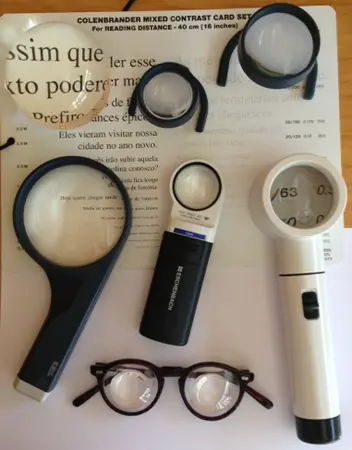
2. Low Vision Aids
Specialized visual aids can help people use their remaining vision more effectively. These may include:
- Magnifying glasses and handheld magnifiers.
- Electronic magnifiers and video magnification systems.
- High-contrast reading materials.
- Telescopic devices for selected distance-vision tasks.
- Appropriate lighting and glare-control devices.
The right device depends on the person’s visual abilities and daily activities. Professional assessment and training can help patients use these aids effectively.
3. Digital and Assistive Technology
Modern technology can make everyday activities easier for people with reduced vision.
Examples include screen magnification, text-to-speech software, voice assistants, accessible smartphone settings, and optical character recognition tools that read printed text aloud.
4. Low Vision Rehabilitation
Low vision rehabilitation helps individuals develop practical skills for everyday life. It may include training in the use of visual aids, reading strategies, lighting adjustments, contrast enhancement, and techniques for completing daily activities safely.
Some people may also benefit from orientation and mobility training or occupational therapy.
5. Treatment of the Underlying Eye Condition
In certain cases, treating the underlying disease may preserve or improve vision. For example, selected retinal conditions, cataracts, and diabetic eye complications may have treatment options.
However, established damage may not be reversible. Early diagnosis and appropriate follow-up are important for protecting remaining vision.
Low Vision Care for Children
Children with low vision may experience difficulties with reading, classroom activities, recognizing objects, or participating in everyday activities.
Early assessment and appropriate support can help children access educational materials and participate more comfortably in school and home environments.
Support may include suitable magnification devices, accessible learning materials, seating adjustments, improved classroom lighting, and coordination with teachers and rehabilitation professionals.
How Can Families Support Someone With Low Vision?
Family members can make a meaningful difference by:
- Keeping household pathways clear and organized.
- Improving lighting in reading and working areas.
- Using high-contrast labels on frequently used items.
- Making text larger on phones and computers.
- Offering assistance when needed while encouraging independence.
- Attending recommended eye examinations and rehabilitation sessions.
Small adjustments can help improve safety, confidence, and independence.
Low Vision Care at Brainsight Neurovision Institute, Kolkata
At Brainsight Neurovision Institute, we are committed to promoting awareness of visual impairment and helping patients understand available eye-care and rehabilitation options.
If you or a family member has difficulty performing daily activities because of reduced vision, contact our institute to enquire about available assessment, low vision support, and referral services.
Visit Brainsight Neurovision Institute
Address: 5, Dr. Akshoy Paul Road, Shimultala, Behala Industrial Estate, Behala, Kolkata, West Bengal – 700034.
Landmark: Near National Gems Higher Secondary School.
Phone: +91 75012 21216
Call Now to Enquire About Low Vision Care
Brainsight Neurovision Institute — Better Vision • Brighter Tomorrow
Medical Disclaimer: This article is for educational purposes only and is not a substitute for professional medical advice, diagnosis, or treatment. Low vision services and treatment options depend on individual assessment and service availability.