Neuro-Optometric Treatment and Vision Rehabilitation in Kolkata
Brainsight Neurovision Institute | Better Vision • Brighter Tomorrow
Vision is more than seeing clearly. The brain and eyes work together to help us focus, track moving objects, judge distances, read, maintain balance, and understand our surroundings.
Neuro-optometric rehabilitation is a specialized approach to assessing and managing visual difficulties associated with brain injury or neurological conditions. These difficulties may occur following a concussion, head injury, stroke, or other neurological disorders.
At Brainsight Neurovision Institute, Behala, Kolkata, we believe that understanding the relationship between the eyes and the brain is an important part of comprehensive vision care.
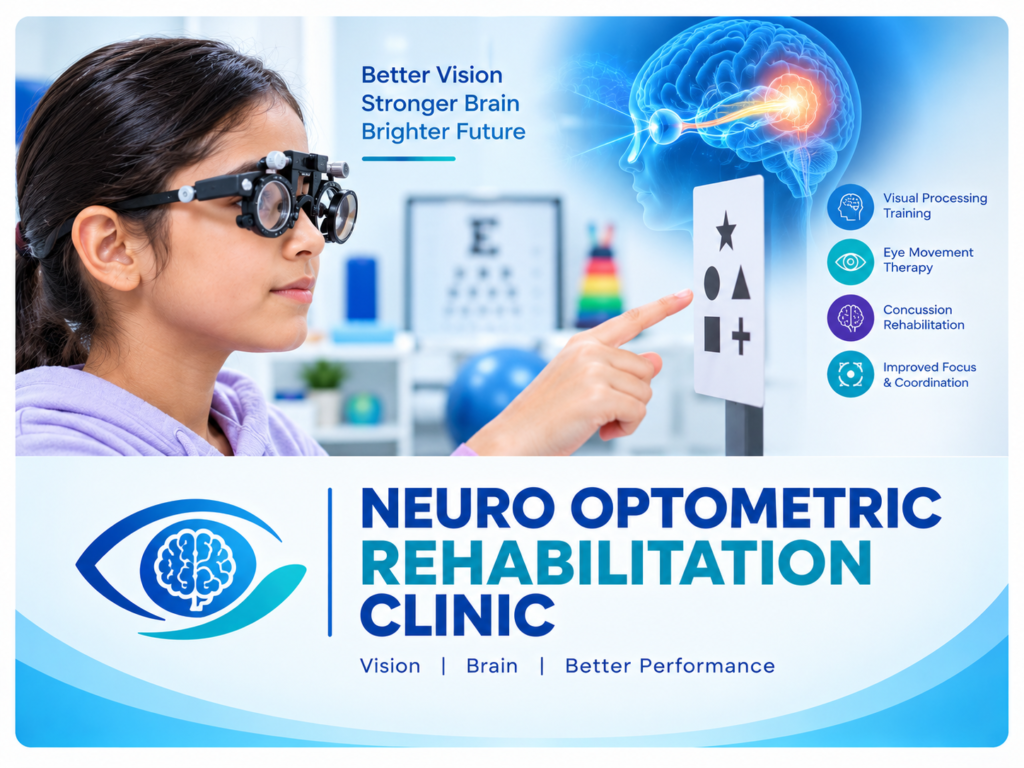
What Is Neuro-Optometric Treatment?
Neuro-optometric treatment focuses on visual problems that may arise when the brain’s visual processing systems or the pathways connecting the eyes and brain are affected.
Even when the eyes appear healthy, a person may experience difficulty coordinating both eyes, focusing, tracking moving objects, or processing visual information.
A comprehensive assessment can help identify specific visual problems and determine whether targeted vision rehabilitation, optical correction, medical evaluation, or referral to another specialist is appropriate.
Who May Need Neuro-Optometric Rehabilitation?
Neuro-optometric assessment may be considered for people experiencing visual difficulties associated with:
- Concussion or traumatic brain injury.
- Stroke or other neurological conditions.
- Difficulty coordinating both eyes.
- Certain acquired eye movement disorders.
- Visual difficulties affecting reading and everyday activities.
- Selected cases of persistent visual symptoms following a neurological injury.
Not everyone with these conditions requires vision therapy. Treatment should be based on an individual clinical assessment.
Common Symptoms of Visual Dysfunction
People with neurological visual difficulties may experience:
- Blurred or double vision.
- Difficulty focusing on near objects.
- Eye strain or headaches during reading.
- Difficulty following moving objects.
- Trouble moving the eyes smoothly between words or lines.
- Sensitivity to light.
- Difficulty judging distances or navigating busy environments.
- Visual discomfort in supermarkets, crowds, or visually complex surroundings.
These symptoms can have several causes. A proper eye examination and, when indicated, neurological assessment are important to determine the underlying problem.
Types of Neuro-Optometric Treatment
Treatment depends on the specific visual dysfunction, its cause, and the patient’s overall health.
1. Binocular Vision Rehabilitation
Binocular vision rehabilitation focuses on how effectively both eyes work together.
For selected conditions, structured exercises may help improve specific functions such as convergence, the ability to turn both eyes inward to focus on a near target.
Treatment should be tailored to the diagnosed problem rather than prescribed as a general solution for every visual symptom.
2. Eye Movement and Tracking Exercises
Some patients experience difficulty following moving objects or shifting their gaze accurately between targets.
When an eye movement problem is identified, targeted rehabilitation may be considered to address the affected function.
Exercises should be selected and supervised by an appropriately qualified professional, particularly after brain injury.
3. Accommodation and Focusing Rehabilitation
Accommodation is the ability of the eyes to adjust focus between objects at different distances.
Some people develop focusing difficulties after a concussion or neurological injury. Depending on the diagnosis, treatment may include appropriate optical correction and selected focusing exercises.
4. Prism Glasses and Optical Correction
Prism lenses may be prescribed for certain types of binocular vision disorders or double vision.
The need for prism correction depends on the nature and stability of the eye alignment problem. Prism glasses do not treat every cause of double vision, and sudden-onset double vision requires urgent medical assessment.
5. Visual Processing and Functional Rehabilitation
Some patients have difficulty interpreting visual information or functioning comfortably in visually complex environments.
Management may involve strategies to improve visual efficiency, environmental modifications, occupational therapy, or referral to other rehabilitation professionals.
The approach depends on the person’s specific difficulties and the underlying neurological condition.
Neuro-Optometric Rehabilitation After Concussion or Brain Injury
Following a concussion or traumatic brain injury, some individuals experience visual symptoms that interfere with reading, computer use, work, or study.
A suitable evaluation may assess:
- Eye alignment and coordination.
- Near focusing ability.
- Eye movements and tracking.
- Visual symptoms during reading.
- The effect of visual tasks on daily activities.
Treatment may involve selected vision rehabilitation, appropriate glasses, symptom-management strategies, or multidisciplinary care.
Important: Evidence for vision rehabilitation varies by condition and treatment method. Not every therapy advertised for neurological vision problems has been proven effective, so treatment should be based on a clear diagnosis and appropriate clinical evidence.
Neuro-Optometric Care for Children
Some children experience visual difficulties related to neurological or developmental conditions. These difficulties may affect reading, eye coordination, visual attention, and classroom activities.
An appropriate assessment can help determine whether the problem relates to refractive error, binocular vision, eye movements, or another underlying condition.
Parents should seek professional advice when a child experiences persistent visual symptoms or difficulties following a head injury.
Why Early Assessment Matters
Identifying visual dysfunction can help patients understand their symptoms and explore suitable management options.
A comprehensive assessment may include visual acuity, refraction, eye alignment, focusing ability, eye movements, and other tests selected according to the patient’s symptoms.
When necessary, the patient may also require assessment by an ophthalmologist, neurologist, or other qualified healthcare professional.
Neuro-Optometric Vision Care at Brainsight Neurovision Institute
At Brainsight Neurovision Institute, we are committed to promoting awareness of visual health, binocular vision, and rehabilitation options for people experiencing visual difficulties.
If you or a family member experiences persistent visual discomfort, focusing problems, double vision, or difficulty with visual tasks following a neurological injury, contact our institute to enquire about available assessment and referral services.
Contact and Location
Brainsight Neurovision Institute
Address: 5, Dr. Akshoy Paul Road, Shimultala, Behala Industrial Estate, Behala, Kolkata, West Bengal – 700034.
Landmark: Near National Gems Higher Secondary School.
Phone: +91 75012 21216
Call Now to Enquire About Vision Care
Better Vision • Brighter Tomorrow